top of page

Photographer, Filmmaker, Visual Artist

Joshua Grafstein

VANCOUVER, CANADA

Joshua Grafstein is a Vancouver based photographer, videographer, and creative technologist working under the name JustJash. For over sixteen years, his career has focused on documenting live events, festivals, concerts, and immersive art experiences through photography and short form video.

Following the pandemic, Joshua expanded his practice by collaborating with marketing and creative agencies, producing commercial content for brands, event promoters, artists, musicians, and record labels. This experience strengthened his ability to move between fast paced commercial production and independent creative work.

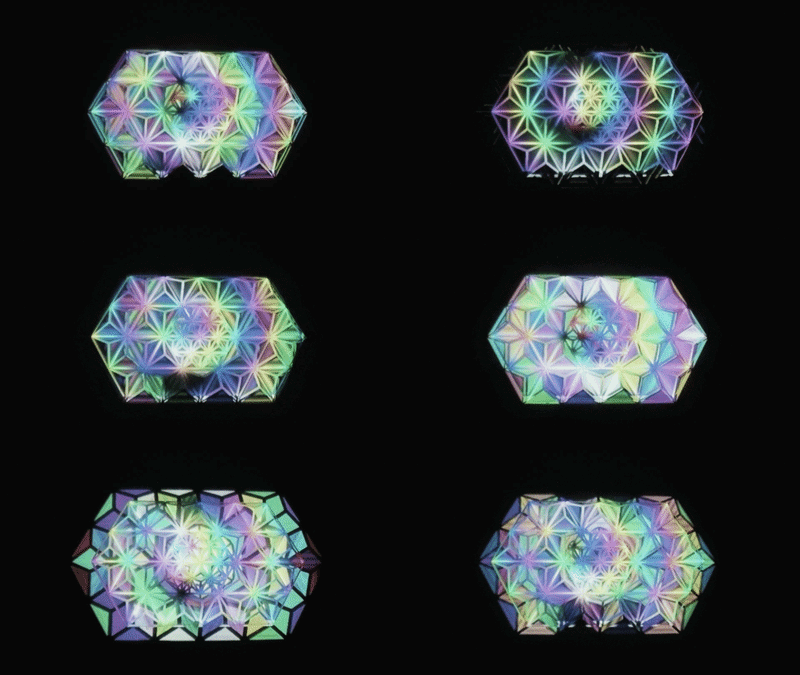
Alongside his commercial practice, Joshua creates projection-based immersive experiences that explore light, space, perception, and human interaction. His work spans festival documentation, projection mapping, real-time visual systems, and interactive installations.

He has worked with event promoters including Goldenvoice, AEG Presents, Insomniac Events, and Superfly Presents. He has worked with Brands like Converse, Hennessy, Google Pixel, Nespresso, and Bumble (to name a few).

What are you making right now?

I am currently developing immersive installations that use light, projection, and responsive technology to transform physical space. My primary project, Into the Mist, explores how projected light can interact with a curtain of mist to create an environment that shifts as people move through it. Alongside this work, I am experimenting with reflective surfaces, transparent materials, and atmospheric effects to create installations that encourage participation and play. I am interested in making experiences where technology supports the work rather than becoming the focus. At the same time, I continue working as a photographer and videographer, documenting festivals, concerts, and public art. Those experiences continue to shape my artistic practice and inform the environments I hope to create.

If you could spend an hour with anyone you admire, living or dead, who would it be and what would you ask them?

If I had to choose one, it would be David Lynch. His work has always shown that mystery and emotion can be more powerful than explanation. I'd spend the hour asking less about filmmaking and more about his creative process. I'm fascinated by how artists notice ideas that most people overlook, then develop those fleeting moments into work that continues to resonate decades later. I'd want to know how he recognized inspiration in everyday life, how he decided which ideas were worth pursuing, and how he protected those ideas through the long process of making them real. Those questions also apply to artists like Stanley Kubrick and Salvador Dalí. Their work reminds me that great art often begins with curiosity, careful observation, and the willingness to follow an idea further than anyone else.

What would you like people to understand about your work? 

My work sits at the intersection of photography, immersive media, and creative technology. After more than sixteen years documenting festivals, concerts, public art, and live experiences, I became interested in creating the kinds of moments I had spent years photographing. Using light as my primary material, I combine projection, responsive digital systems, and physical environments to create installations that invite curiosity and participation. My commercial work informs my artistic practice, giving me the experience to collaborate across disciplines while developing immersive installations that explore perception, atmosphere, and the relationship between the physical and digital. I hope my work leaves people with a lasting sense of wonder and a new way of seeing the spaces around them.

What medium do you work in and what drew you to it?

Photography was my first creative language. It taught me how to observe light, composition, and the ways people interact with one another and with the spaces around them. Over time, that curiosity expanded into video, projection, and immersive installation. I don't see these as separate mediums. They are different ways of exploring the same ideas. Photography captures a moment, while installation allows me to create one. Light remains the common thread throughout my work. It can document a place, transform architecture, or shape how people experience an environment. I choose the medium that best serves the idea rather than beginning with a specific technology or process. My goal is always to create experiences that invite people to pause, engage, and see familiar spaces from a different perspective.

What do you need in your workspace to spark creativity?

I do my best work when I'm surrounded by curious, creative people who are open to sharing ideas and challenging one another. Conversation is often where a project begins. A casual discussion, a different perspective, or seeing someone else's process can completely change how I approach a problem. I also draw a great deal of inspiration from experiencing art in person. Visiting galleries, museums, light festivals, concerts, and public art installations reminds me what's possible and motivates me to keep experimenting. While I value quiet time to develop ideas, creativity doesn't happen in isolation for me. I thrive in environments where artists from different disciplines can exchange knowledge, collaborate, and inspire one another. Being part of an active creative community is one of the biggest drivers of my practice.

Has your identity, culture, heritage, or community influenced your creative practice?

My Jewish identity has influenced my work most strongly through projects that bring people together around shared humanity. Following the events of October 7, I started Notes for the Hostages, an initiative inviting people to write messages of love, hope, and support for the hostages and their families. What began as a personal idea quickly became a collective effort, with people contributing handwritten notes that I photographed and shared on Instagram. What made the project meaningful wasn't that I started it, but that so many others chose to participate. It became a reminder that creative work can be a vehicle for compassion and connection. Through social media, many of these messages reached relatives of the hostages, offering a small gesture of comfort during an unimaginable time. The experience changed how I think about art. It reinforced my belief that creative practice isn't only about self-expression. It can also create community, amplify empathy, and help people feel seen during moments of crisis. That lesson continues to shape how I approach my work today.

What does success look like to you as a creative?

Success, to me, is having the freedom to create ambitious work at a large scale and share it with a broad audience. I want to make immersive installations that transform public spaces, spark curiosity, and create memorable experiences for thousands of people. It's also about building a sustainable practice where I can continue experimenting, collaborating with talented artists, and taking creative risks without compromising the work. If my projects encourage people to slow down, engage with their surroundings, or see something familiar in a new way, I consider that meaningful success. Ultimately, I hope to create work that people remember long after they've experienced it, and to contribute lasting, thoughtful installations to the public realm.

© 2026 FIELD Coalition. All Rights Reserved.

Powered by

6.png
bottom of page